E-commerce / Marketplace
Amanoon — Multi-Vendor Marketplace & Seller Portal
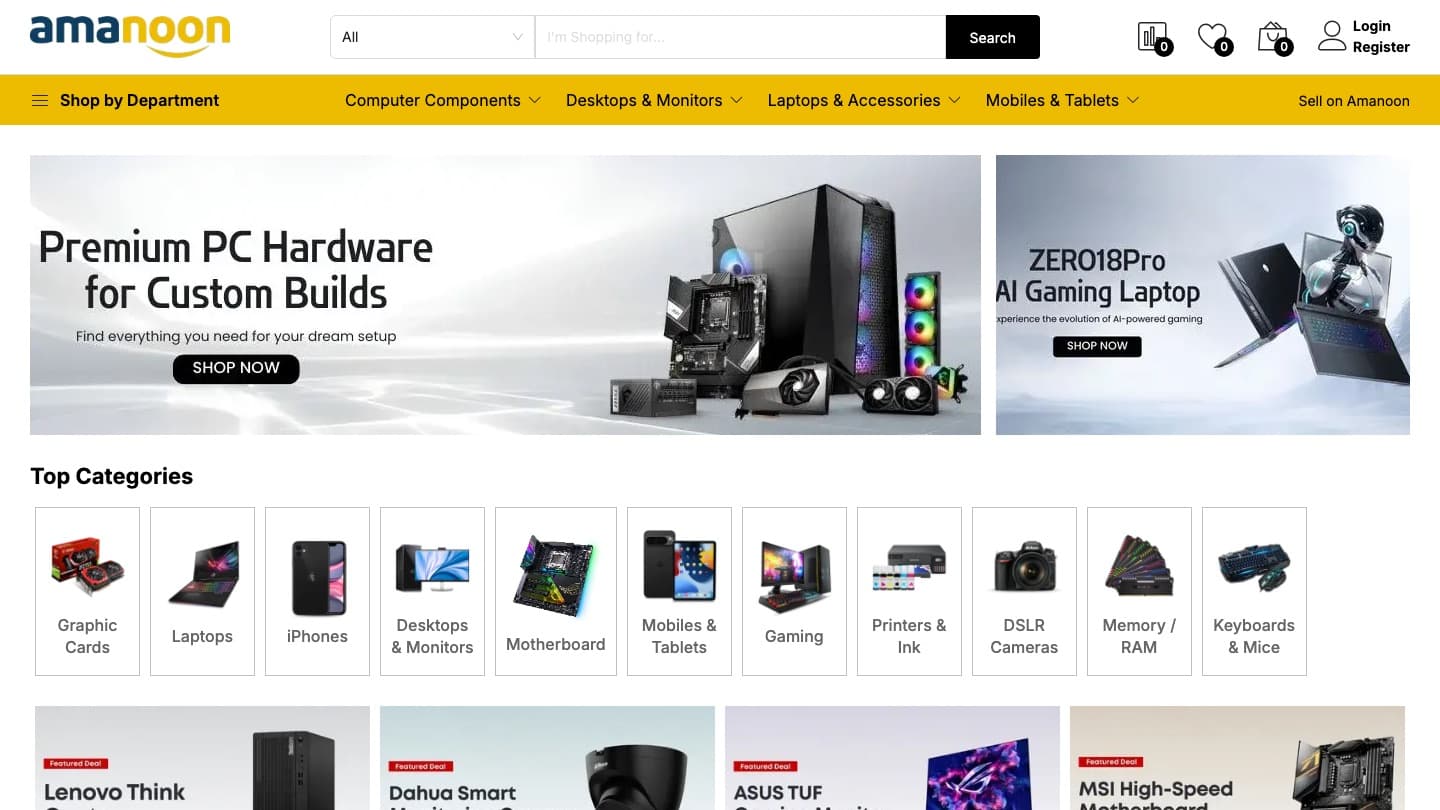
Dubai's multi-vendor electronics and IT marketplace: a Next.js storefront plus a separate seller portal where vendors run their own catalogue and orders.
- Next.js
- React.js
- Node.js
- MongoDB
- REST APIs
- Netlify
- SSR / SSG
- Client
- Amanoon
- Duration
- Jun 2021 — Dec 2021
- Category
- E-commerce / Marketplace
Amanoon is a Dubai-based multi-vendor marketplace for electronics and IT hardware — laptops, components, networking, smartphones and point-of-sale equipment. It runs as two Next.js applications: the customer storefront at amanoon.ae and a separate seller portal at seller.amanoon.ae, both deployed on Netlify.
The storefront covers catalogue browsing, category and brand navigation, product pages, cart and checkout, with Next.js server rendering the pages that matter for search visibility. The seller portal is the other half of the business: vendors sign in to manage their own products, stock, pricing and order fulfilment without touching anyone else's data.
The interesting work in a marketplace is never the storefront — it is the rules underneath. A single order can span multiple sellers, which fans out into separate fulfilment states, separate notifications and separate settlement, all of which has to stay coherent for the customer looking at one order.
Key features
Customer storefront with catalogue, category navigation, cart and checkout
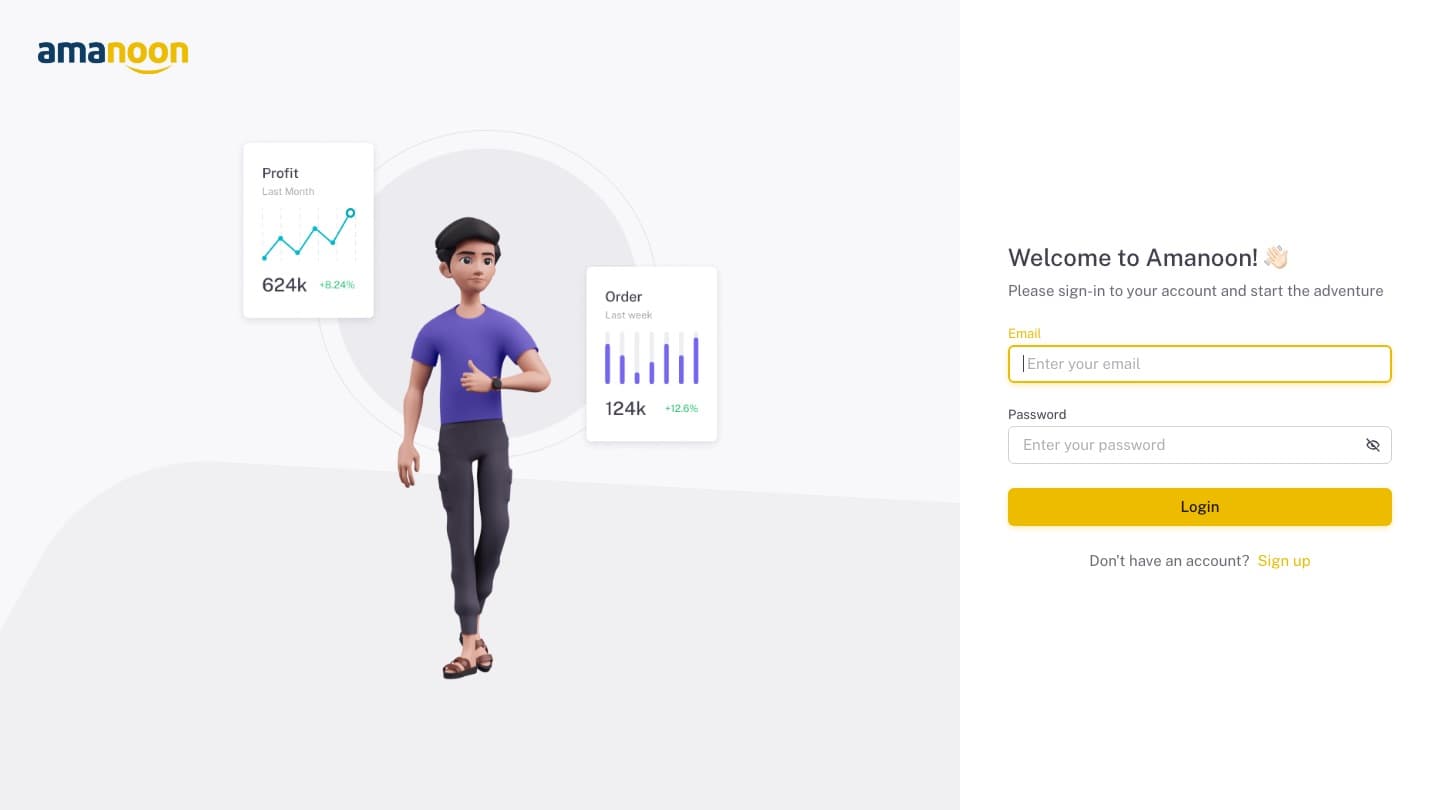
Separate seller portal for vendor product, inventory and order management
Multi-vendor order model — one customer order fanning out to multiple sellers
Server-rendered product and category pages for search visibility
Vendor-scoped data access so sellers only ever see their own catalogue
Deployed on Netlify with Next.js SSR/ISR rendering
Screenshots
My role
Frontend developer across both Next.js applications.
Built storefront browsing, product detail, cart and checkout flows
Built the seller portal's authenticated product, inventory and order screens
Integrated both applications against the marketplace REST API
Handled rendering strategy — which pages are static, server-rendered or client-only
Challenges & solutions
One order, many sellers. Customers expect a single order; sellers expect only their part of it. The order model splits into per-seller fulfilment units behind a single customer-facing view, so neither side has to understand the other's mental model.
Search visibility on a catalogue that changes hourly. Fully static pages go stale and fully dynamic pages are slow, so product and category routes use incremental revalidation to stay both indexable and current.
Related projects
 E-commerce
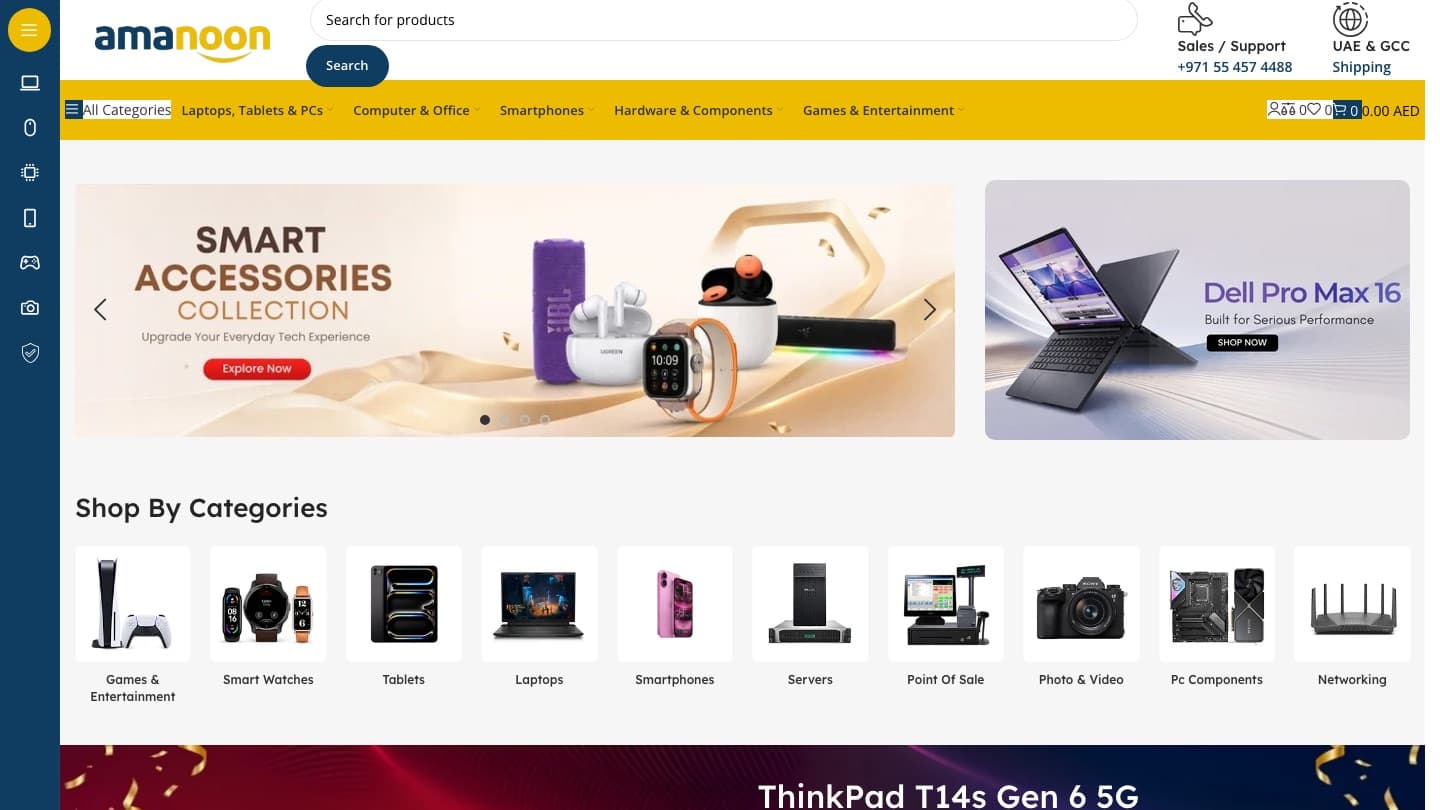
UAEDubai.ae — Amanoon UAE Electronics Store
WooCommerce storefront for the UAE and GCC market: laptops, PCs, servers and components across a deep multi-level category tree, priced in AED.
- WordPress
- WooCommerce
- PHP
- MySQL
- +3
 E-commerce / Grocery
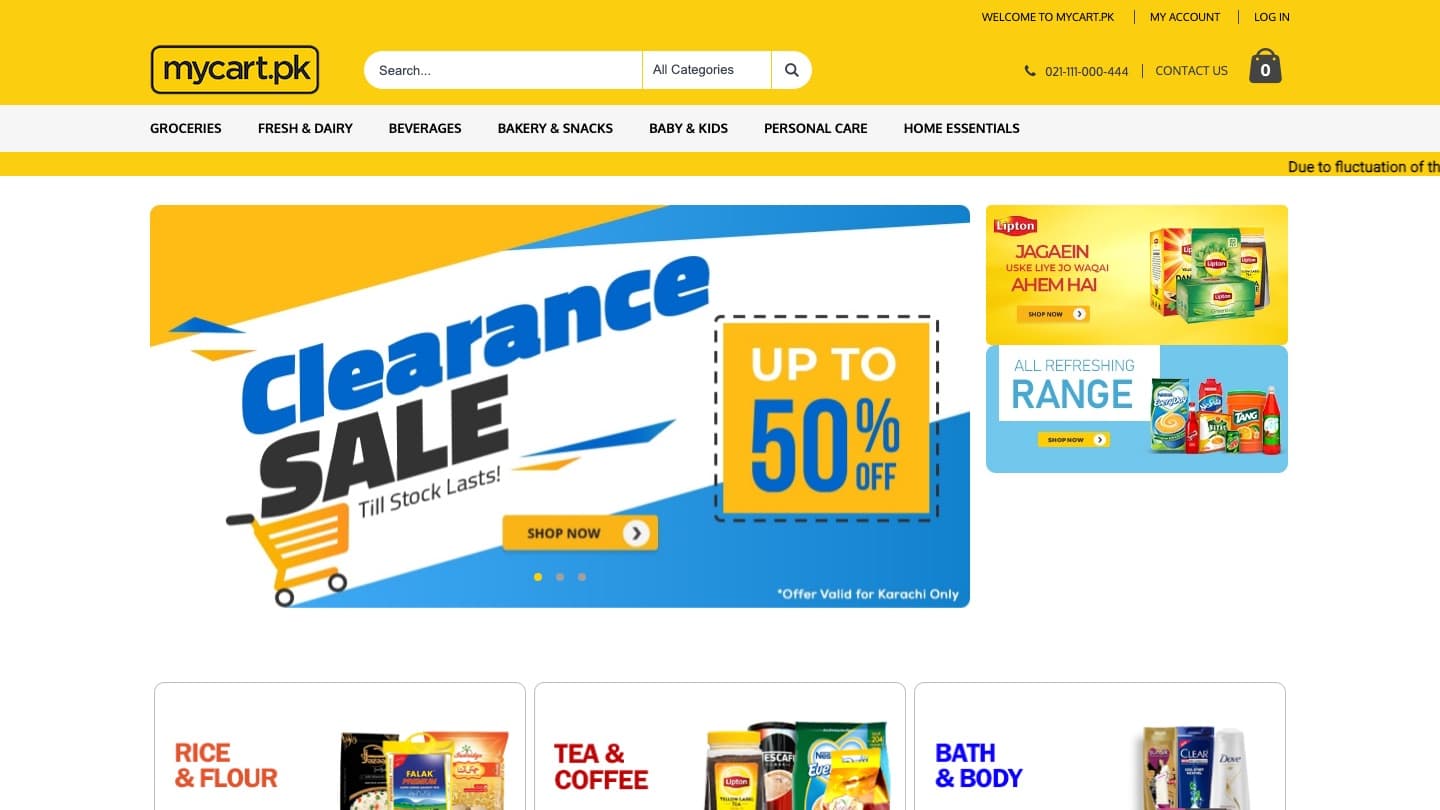
MyCart.pk — Online Grocery Store
Magento grocery storefront for Karachi: seven top-level departments, daily-deal merchandising and same-city delivery with market-rate pricing at fulfilment.
- Magento
- PHP
- MySQL
- jQuery
- +3